New lupus research on measuring long-term organ damageNews

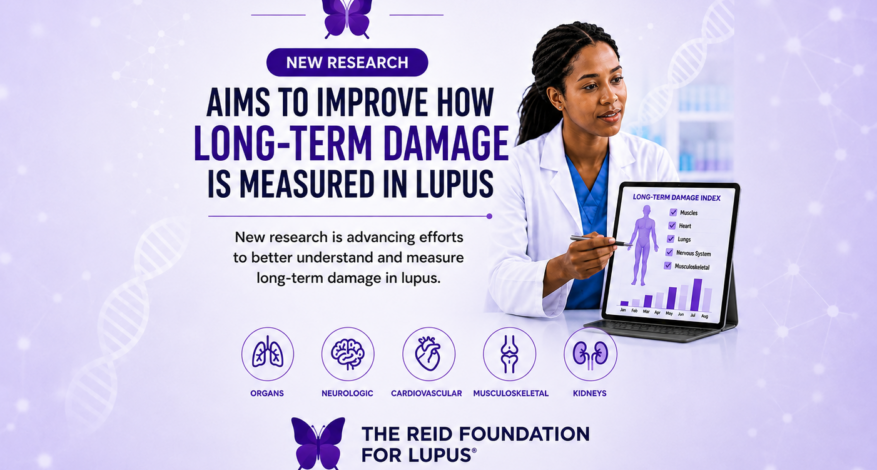
New Research Aims to Improve How Long-Term Damage Is Measured in Lupus

New research is advancing efforts to improve how doctors measure long-term organ damage in people living with systemic lupus erythematosus (SLE).

Researchers are working to modernize the SLICC/ACR Damage Index, a long-standing tool used to assess permanent damage that can develop over time as a result of lupus, its complications or treatment.

As part of the effort, 146 health professionals and people with lupus from 35 countries participated in a consensus process that reviewed 226 potential measures. The group ultimately narrowed those measures to 39 candidates for a proposed updated damage index.

The revised approach is intended to better reflect today’s understanding of lupus and current standards of care. Researchers are also considering how different types and levels of damage should be weighted so that the index can more accurately capture the long-term impact of the disease.

The updated index is still being developed and tested. The next steps include refining the scoring system and evaluating the revised tool for validity, reliability and responsiveness before it can be considered for broader use.

For people living with lupus, more accurate ways to measure long-term damage could help researchers and healthcare providers better understand disease progression, compare outcomes and improve future care.

For additional information, read the full research summary from the Lupus Foundation of America.

READ MORE
News

Organ Damage Associated with Worse Cognitive Performance in People with Lupus 

March 6, 2023


In a new study, organ damage was associated with worse cognitive performance in people with lupus. Cognitive dysfunction (CD) or “brain fog ” is a functional impairment whereby an individual exhibits deficits in attention, learning (verbal and nonverbal), memory (short-term and working), problem solving, motor (physical) function, processing speed, visual and auditory processing. At some point during their lives, 70-80% of people with lupus experience brain fog.


Researchers examined the disease and treatment records of 89 people with lupus. They found that organ damage was consistently associated with CD, and resulted in poorer performance in three of seven tests traditionally given to assess cognition. The researchers examined other markers of disease activity, blood test results, and genetic involvement for possible association to CD and none were found. CD can occur in people with lupus who do not exhibit high disease activity at a given point in time. Cognitive screening is important as prevalence of CD was identified by formal testing in only 8% of the group.


One of the study authors, Eric Morand, MBBS, PhD, Monash University, received the Lupus Foundation of America’s 2022 Evelyn V. Hess Award. Learn more about lupus and brain fog.


Article Credit: Lupus Foundation of America | lupus.org

Read full article here >

READ MORE